


Customer Stories
Carrying on a Legacy: How One Vancouver Notary is Blending Tradition and Technology
A conversation with Juliana Castro
7 June 2026
Listen to this article
7:09
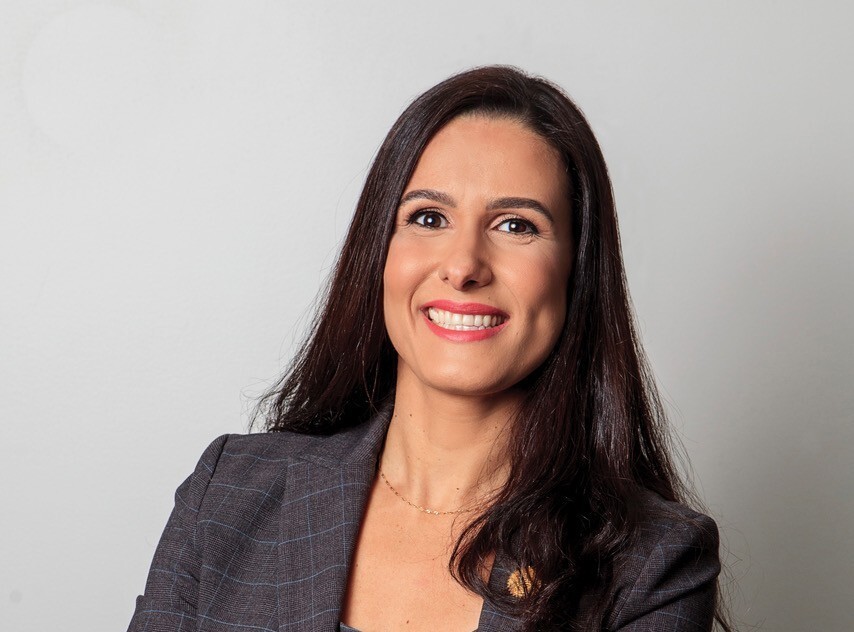
When clients walk into the small office of Notary Castro in downtown Vancouver, they’re stepping into more than just a place of business. For notary public Juliana Castro, the space carries a legacy — it’s where her late father, Marco, once practiced, and where she now continues his work five years after taking over the firm.
“My father was the first to tell me I’d make a good notary,” she recalls. “At the time, I couldn’t see it. I was working in sales for a large food manufacturer. But he kept encouraging me, and eventually I enrolled in the program.”
By the time she graduated, her father had passed away. The two never had the chance to work side by side, though she fondly remembers evenings helping him with file preparation and archiving or witnessing wills for his clients. Taking over his practice felt like a way to honour him. “He’s still here with me,” she says, gesturing to the picture of him and her late brother that sits on her desk.
A Community of Professionals
For Juliana, being part of British Columbia’s notary community is another source of pride. “We’re a group of really ethical and strong professionals, and we help each other,” she explains. “When I see that a notary is representing the other side of a transaction, I feel relief. I know things will go smoothly, and that we’ll find a fair way forward.”
Rather than viewing fellow notaries as competitors, she sees them as collaborators. Many notaries carve out niches serving specific cultural or linguistic communities. In her case, speaking English, Portuguese, and Spanish allows her to support clients who might struggle with English-language legal documents. “It makes a big difference for people to feel fully understood,” she says.
Having moved from Brazil in 2003, she understands firsthand the challenges of adapting to a new system. Today, as she raises young children in Vancouver, she feels firmly rooted in Canadian life. “I’m as Canadian as I am Brazilian now,” she says with a smile. “When I visit Brazil these days, the culture feels a little different through my Canadian lens. I love that I get to bring both parts of me wherever I am.”
How Technology Powers Her Practice
Like most modern notaries, technology is woven into her daily practice, but it hasn’t always been this way. She laughs recalling how, years ago, her father would physically deliver paper documents to the land title office in New Westminster for registration. “He’d hand them across the counter to be stamped. Now, it’s all online. It’s amazing how far we’ve come.”
Beyond emails, she navigates portals like the LTSA for title registration, receives mortgage instructions through Unity® Lender Centre, and receives payout statements electronically. Dye & Durham’s ProSuite helps streamline conveyancing files, while ProTrust keeps trust account reconciliation on track— “thank goodness, that helps me a lot since I’m not too keen on accounting,” she admits with a laugh. Digital signing has also transformed how she interacts with clients, and she has also begun experimenting with AI for some document drafting.
These are some of the tools she depends on for reliability and efficiency, qualities she looks for when adopting any new technology. “Technology can be a best friend or an enemy,” she says. Glitches and downtime can be frustrating, especially when facing a deadline, so reliability is non-negotiable for her. Efficiency is another key consideration when adopting technology: “If it makes my practice more efficient, I’m open to it.”
For Juliana, as for many notaries, the biggest hurdle in adopting new technology is finding the time to learn it. “That’s time you can’t bill. But I understand that carving out the time is necessary if you want to gain efficiencies later. It’s an upfront cost that’s worth it, because you gain it back— and much more — down the road if it makes your practice run more efficiently.”
The Client Lens
Her clients, often first-time homebuyers, bring their own expectations to the table. “They come with a lot of questions,” she says. “It’s a new experience for them, so we tailor our approach to give each client personalized attention.”
Most times, technology supports that personalization through email, phone, and even client portals that can streamline communication. A few times though, it complicates things. She’s noticed clients increasingly turning to generative AI tools to draft documents such as powers of attorney. “It’s interesting,” she says. “Sometimes it helps because they understand a bit of the process. But it can also make things harder, because the documents aren’t always right, and they may think they don’t need my full services.”
Still, she isn’t alarmed. “I believe technology won’t replace notaries but will continue to assist us. This is one of the oldest professions, and I believe it will endure.”
Looking Ahead
When asked to imagine her ideal office five years from now, efficiency and balance top the list. She pictures automated intake processes, correspondence, and document exchanges flowing seamlessly through a single system, saving time for both notaries and clients. “If technology makes it possible for me to help more clients while giving me more time with my family, that’s the real benefit,” she says.
Work-life balance is a recurring theme. Recent late nights at the office have made her realize what matters most. “I’d use those time savings to leave earlier and be with my kids,” she admits.
Still, she knows that joy can come from unexpected places too. She lights up as she recalls winning tickets to see Oasis in Toronto through a Dye & Durham prize draw at the BCNA conference last year. At first, she almost didn’t attend the happy hour event where tickets for the draw were provided, as it fell on the same day her longtime staff member was leaving, and she felt heavy-hearted. But the hint of an Oasis prize was too much to resist.
For Juliana, the band carries deep meaning: it reminds her of her late brother, who loved to sing along to their songs. “When I saw the email, I asked him from the other side to help me win the tickets,” she says. “And when my name was drawn from over a hundred entries, I just knew he had a hand in it.” The concert became not only a special night out, but also a memory that tied together her past and present in an unexpected way.
Rooted in Both Past and Future
For Juliana, the future of the notary profession lies in striking the right balance between legacy and innovation, between efficiency and personal connection. Her practice is proof that technology can transform workflows, but it’s the human side of notarial work that keeps clients coming back.
“I hope in 20 years we’ll still be here,” she says. “Technology should help us, not replace us. At the end of the day, people still need that human connection.”
CUSTOMER SPOTLIGHT
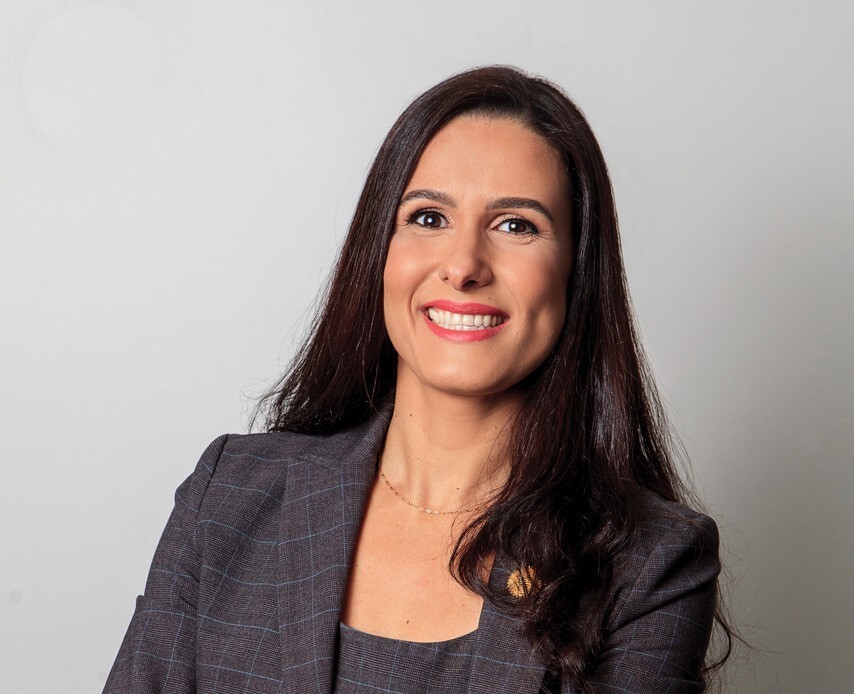
Juliana Castro
Notary Public at Notary Castro
Juliana Castro was commissioned as a BC notary public by the Supreme Court of British Columbia in 2020. Juliana’s passion has always been working with people and making meaningful, long-lasting connections. She feels honored to resume the family notary practice and carry on with the legacy of trust and integrity.
Related Posts

Industry Insights
2026 B.C. Conveyancing Outlook (Survey Report)
The 2026 B.C. Conveyancing Outlook gathers frontline perspectives from across the province to help you...
1 July 2026
Read more
Industry Insights
The Strategic Evolution of Electronic Due Diligence
In the legal and financial sectors, certainty is the only currency that matters. Whether you are securing a...
1 July 2026
Read more